
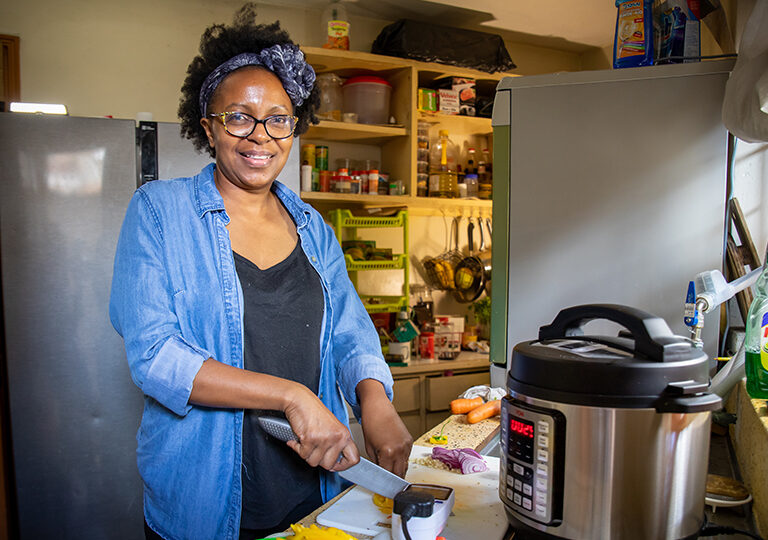
This qualitative ethnographic study was conducted in collaboration with Loughborough University to investigate Ghanaian household’s cooking behaviours, energy consumption patterns, and appliance usage. To better understand how households can transition toward sustainable energy use in the kitchen, the study explores the intersection of cultural practices, energy efficiency, and the adoption of modern cooking technologies.
Cooking is a central activity in every household, deeply embedded in cultural norms and influenced by economic, environmental, and social factors. However, using traditional fuels like charcoal and firewood is still common in Ghana, even though it presents problems for energy efficiency, environmental sustainability, and human health. The transition to cleaner and more efficient cooking technologies, particularly electric cooking appliances, offers significant potential to mitigate these issues. Despite this, adoption rates for such appliances have progressed slowly, hindered by factors such as cost, infrastructure limitations, and cultural preferences.
To give a comprehensive understanding of participant’s kitchen activities and energy implications, the research used a mixed-methods approach that included participant interviews, energy monitoring, and observations. In Kumasi and Accra, this study was carried out in urban, peri-urban, and rural areas, with households from a range of socioeconomic backgrounds.
The study findings are intended to provide actionable recommendations to enhance energy efficiency, promote sustainable cooking habits, and encourage the adoption of modern cooking technologies. Ultimately, this study contributes to a broader understanding of how culturally sensitive, behaviour-focused interventions can facilitate the transition to cleaner and more efficient cooking systems, aligning with global energy and sustainability goals. The study sought to:
- Understand everyday cooking behaviours and their impact on energy consumption.
- Measure energy usage associated with cooking practices and identify energy-saving and wasting behaviours.
- Provide actionable recommendations for behaviour change, appliance design, and policy interventions.
The study used a five-phased research approach, including (1) pre-study interviews, (2) participant observation, (3) energy monitoring, (4) mobile diary documentation via WhatsApp, and (5) exit interviews.
Participants’ cooking behaviours were observed in natural settings to minimise interference, while data on energy usage, appliance preferences, and challenges were recorded and analysed using thematic and quantitative methods.